

Fall Refrain
Turning on cruise control so I can enjoy the views before winter strikes

Just like that, time is up.
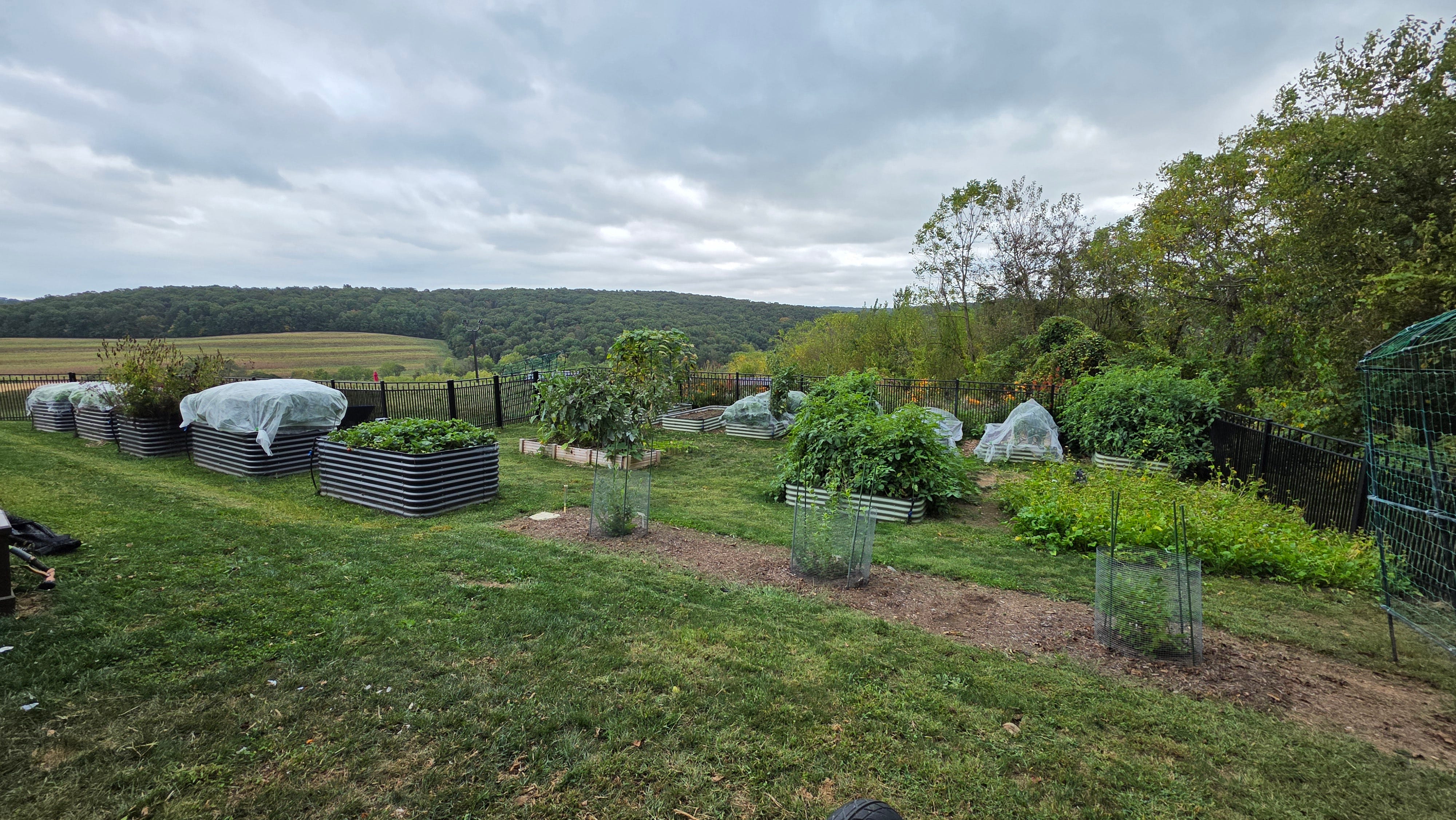
I could sneak in a few last sowings of quick-growing greens to grow in the last few weeks of the season like spinach and arugula, but something feels a little different about this year.
Usually, I am hyper-focused on maximizing my garden space, growing for yield and diversity. This puts a lot of pressure on me to plan, time things perfectly, juggle sowing indoors and potting up seedlings, removing spent plants, and flipping beds in a hurry. At this time last year, I was busy transplanting celery, sowing peas and lettuce, and harvesting beets and radicchio.
However, I also remember the results of last year’s fall efforts. They weren’t so good. While I got some beautiful cabbages, broccoli, and one big cauliflower head, the rest of my fall crop was underwhelming. My peas died after the first light frost, my celery wilted and became a nuisance because I had to cover it in frost blanket every night. Moth caterpillars ruined my carrot harvest. My leafy greens went uneaten or ignored until far past their edible stages.
It’s difficult for me to loosen my grip on the growing season as it comes to a close. By the tail end of summer, I am conditioned into a gardening machine and want to continue to flex my muscles. I have dreams and visions of a garden overflowing with fall staples like turnips, beets, arugula, celery, and carrots but I must remember I am just one human. A human that also needs a break. Who needs to do as much enjoying as machine-ing.
Much of my fall crop was sown midsummer. The brassicas I waited until the end of August to sow last year were sown in early July this time, so they are already mature and will be harvested before the first frost. While I was sowing arugula and spinach at this time last year, I now have more leafy greens in my beds than I can possibly eat. I wanted to have a fall crop of celery, but it just didn’t work out. Germination took too long and the door closed on that opportunity.
Rather than cringe at the losses, though, this year I am much more comfortable letting it go. The garden was beyond successful this year, and the hard work is (mostly) over. Basically, I’ve decided I’m retiring for the year.
Yes, I have plenty to do in terms of winterizing my irrigation systems and flipping beds, but that is all I’m planning to do. I’m not going to try to force more food out of the garden.
We are also tired of cooking and preserving! Every spring we look forward to the fresh vegetables and herbs and all of the flavorful dishes we’re going to make. After all of the meals and scrambling to use what’s in season or what’s in the fridge, however, we are pretty sick of the kitchen. Last year, much of what came out of the garden wasn’t eaten because we were so fatigued. And that is okay!
So, it’s time I accept reality—the gardening season is over for me.
Instead, it is time to relax and cruise into winter, enjoy the last of the strawberries and tomatoes, wear a sweater and pick some pumpkins, turn plants into compost, and reflect on an amazing 2025.
There’s still plenty growing in the garden and I’m excited to share in this post what’s changed in the last few weeks. I’ll also go over what tasks I have completed and plan to complete soon to prepare the garden for winter.
That said, I want to begin to shift focus from what is happening now to what has happened in order to reflect on the biggest successes, losses, and lessons learned this year.
Let’s begin with what has been removed from the garden lately.
Done For The Year
Indeterminate Tomatoes
There is usually a peak in tomato production in the polytunnel from my indeterminate slicer and paste tomatoes. I’ve noticed, though, that after this peak, the quality of the tomatoes markedly decreases. The tomatoes russet, split, or get really small. All signs the plants are also ready for their retirement!
Like last year, my San Marzano tomatoes were late bloomers so they are staying in for a couple more weeks. Otherwise, the polytunnel is now tomato free. It’s really drastic how much bigger the polytunnel feels once the tomatoes have been removed.


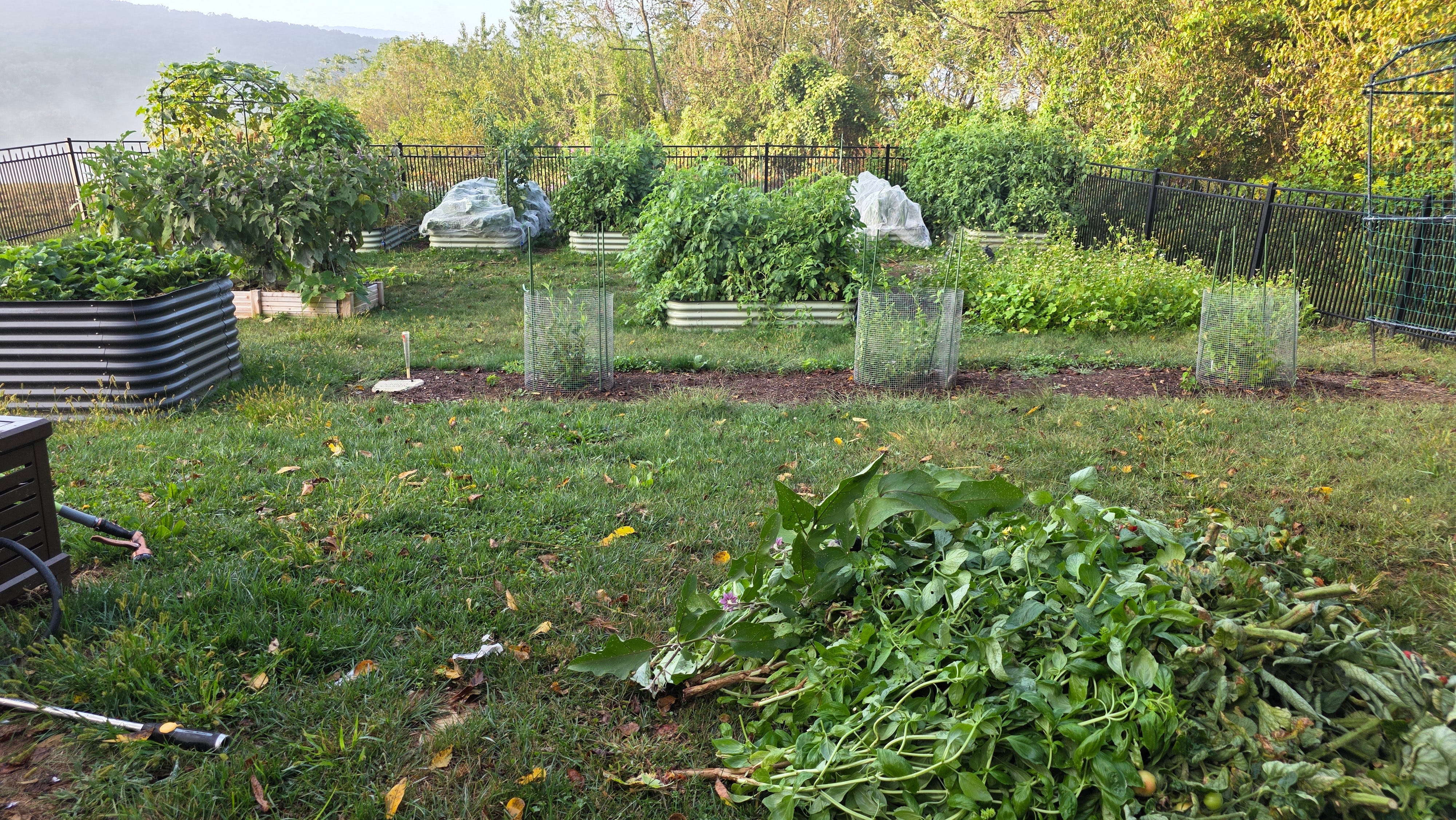
I put the best of the green, unripe tomatoes in a box to see if any ripen eventually. As for the plants, half were mowed over before going into the compost bin. The rest were put in whole.
Dry Beans
Funnily enough, my dry bean plants began to revive themselves before I had a chance to remove them. After my big harvest a few weeks ago, they grew new shoots, leaves, and flowers, and started to put on more pods. Plants really want to live!


Unfortunately for them, I plan to use the dry bean bed for garlic so the bed needed to be flipped as soon as possible.
They were difficult to remove from the trellis since the old shoots became tough and somewhat woody but I managed to get them off with my hands and small pruners.
The bean plants made an excellent addition to the compost pile as well. Furthermore, putting garlic in this bed is going to be a great crop rotation and I hope the extra nitrogen stored in the legume roots will give the garlic a good start next spring!
Cucumbers
I was so devastated when my cucumbers were taken out early in the summer by bacterial wilt, but managed to overcompensate so much that we are now overflowing with both pickling and English cucumbers. Victory is mine!
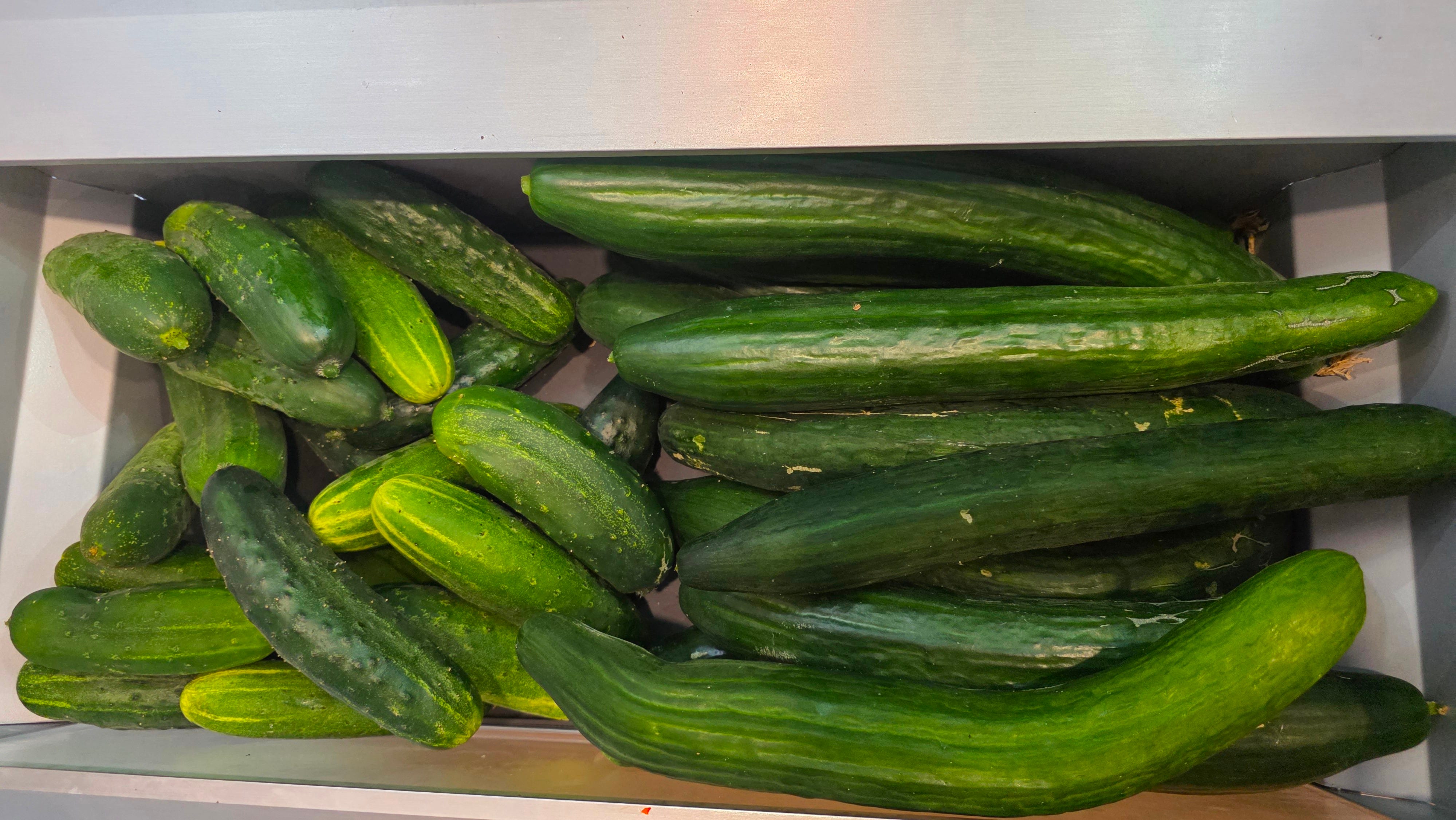
Having too many cucumbers is a better problem to have than having too few. I already canned several quarts of pickles, but will do a final batch for the season soon. As for the English cucumbers, we will turn as many as possible into cucumber soup or gazpacho or salad before they go soft in the fridge.
The plants are looking terrible. They’ve suffered from cucumber mosaic virus for basically their entire lives but managed to hang on long enough to give us a proud harvest. That said, it’s time for them to go!
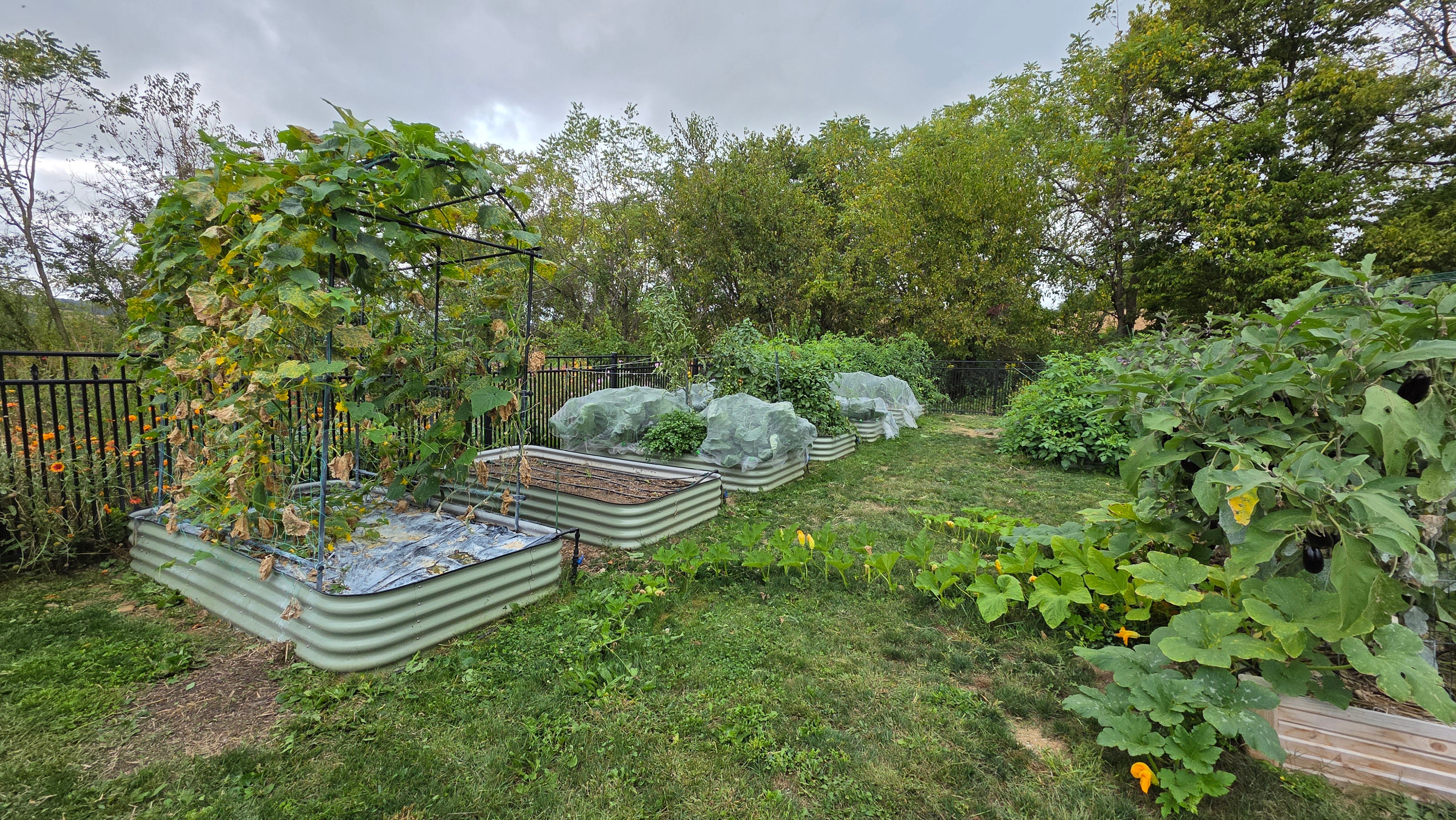
I’ll be cutting them up and putting them in a garbage bag. These will not go into the compost.
Eggplant
I never expected to get so many eggplants from only four plants, but this year was something like an eggplant miracle. The plants are still putting on tons and tons of new fruit. I don’t know why or how, but when good things like this happen you don’t ask questions!
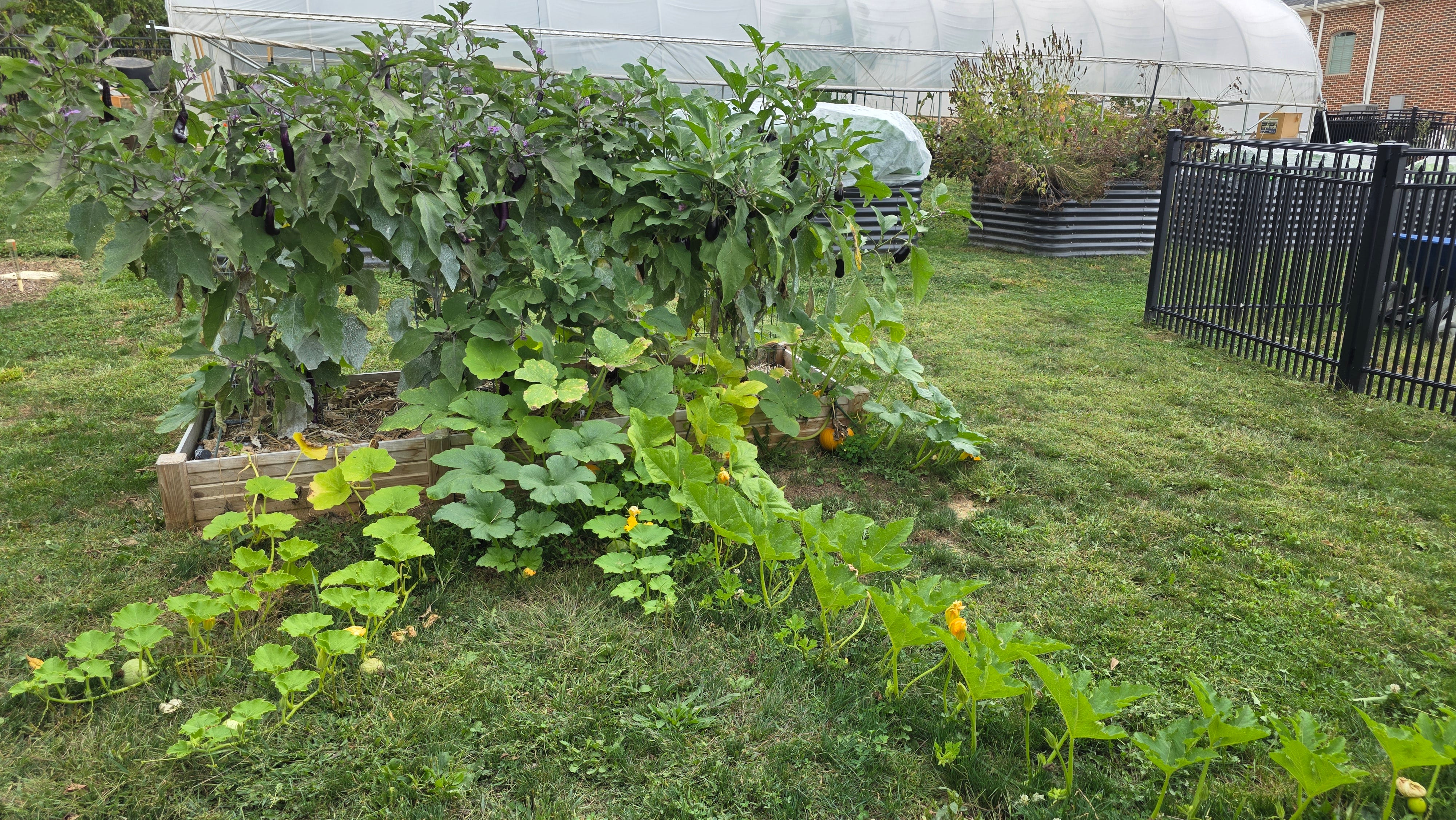
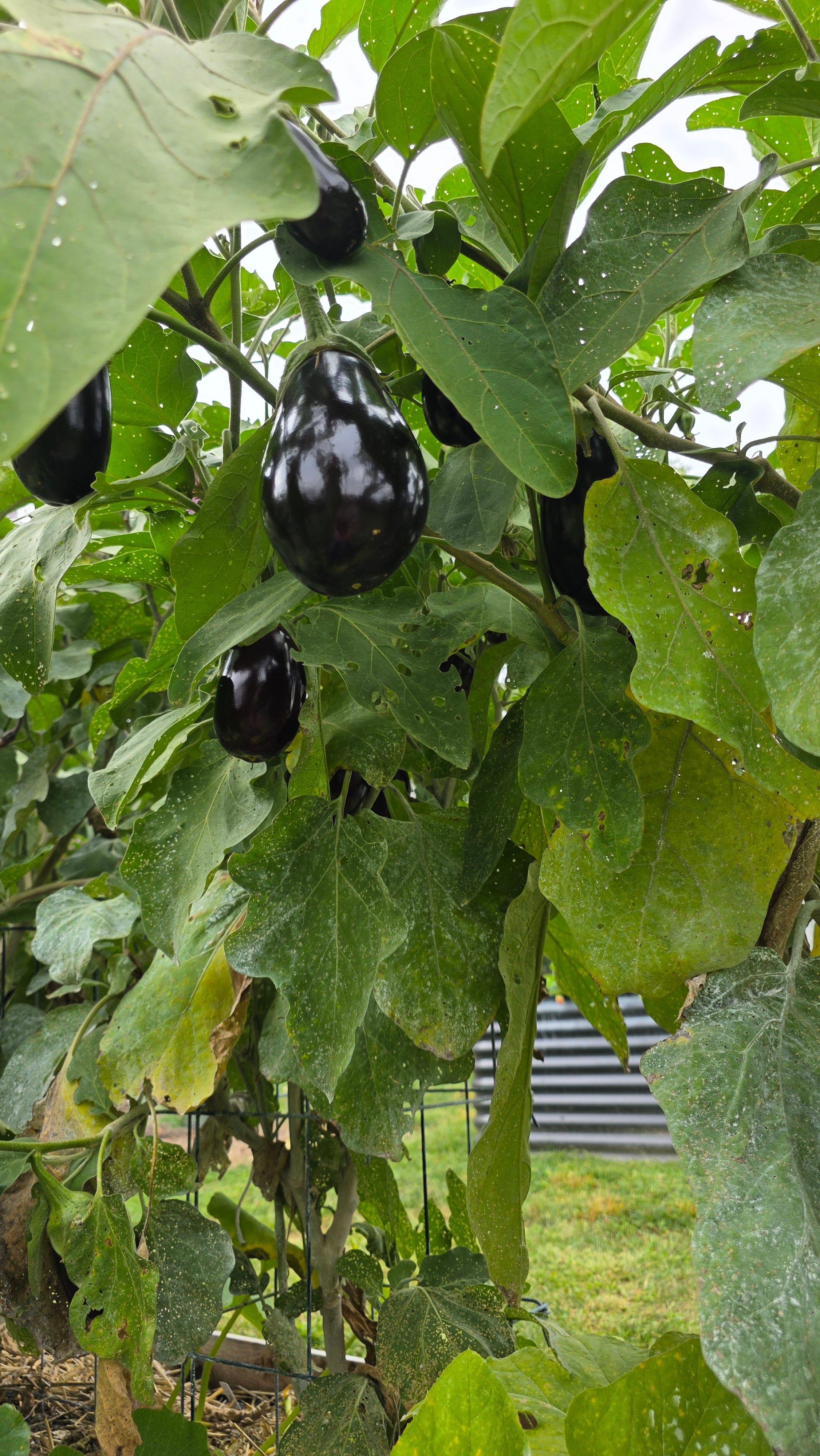
The cool weather will eventually make them unhappy, so I’m going to make one last big harvest and then cut these plants out of the bed to allow the winter squashes below to receive maximum sunlight and ripen their fruit.
After eating and preserving this harvest, I don’t want to see or hear about eggplant for at least six months!
Still Growing Strong
Determinate Tomatoes
Despite growing entirely out of my control, the determinate tomatoes look very good. There are so many green tomatoes on the plants and I’m excited for them to ripen!


I made a number of mistakes with these guys, but the plants seem to be putting up with me.
The Cannellino cherry tomatoes have begun to ripen and I’ve spotted a few Mountain Merit and Tasti Lee slicer tomatoes beginning to turn. Soon, I think, I’ll have a mountain of tomatoes to can and turn into tomato soup to freeze for winter.
I noticed a couple of weeks ago that these determinate tomatoes have been infested with aphids. I don’t think I realized tomatoes could attract aphids. Before I could get together a plan to address the infestation, I noticed a ton of ladybugs and ladybug larvae amongst the foliage which I assumed were munching on the aphids. So, I have so far done nothing to try to control the aphid population because I want to provide the opportunity to the natural predators I attempted to cultivate with my flower patch first.


So far, the aphids haven’t even caused significant damage to the plants. I’m noticing some damage to the growing tips on the plants, but nothing really worth addressing. The ladybugs, I’m confident, will take care of the situation.
Brassicas
It is nearly time to harvest the broccoli I started in July. I wasn’t sure how this sowing would go, as I was worried that the summer heat would cause the plants to bolt prematurely or for the heads to be small. We were fortunate to get a temperate, though wet, summer with an early fall, so the brassicas fared very well until now.
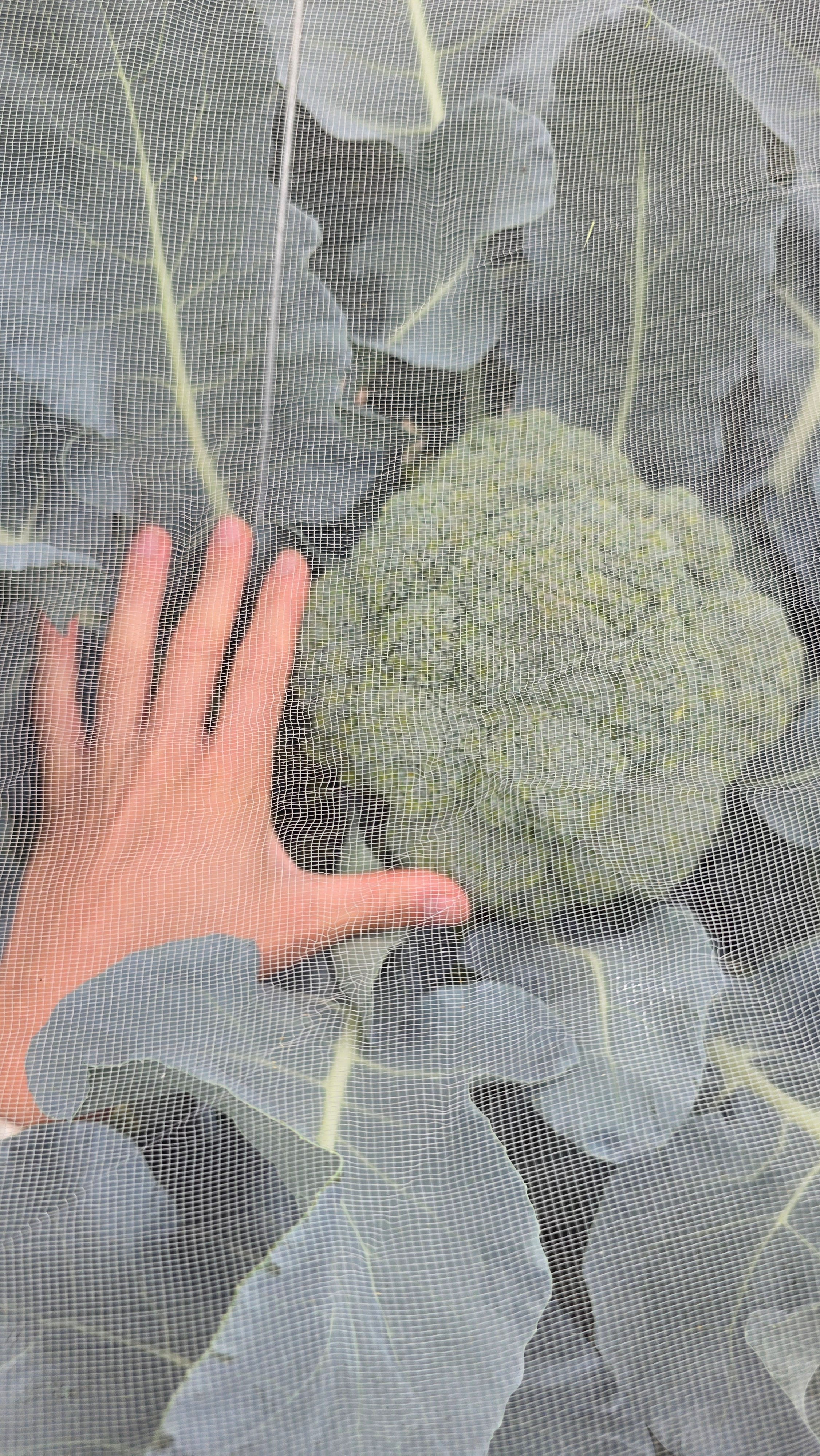
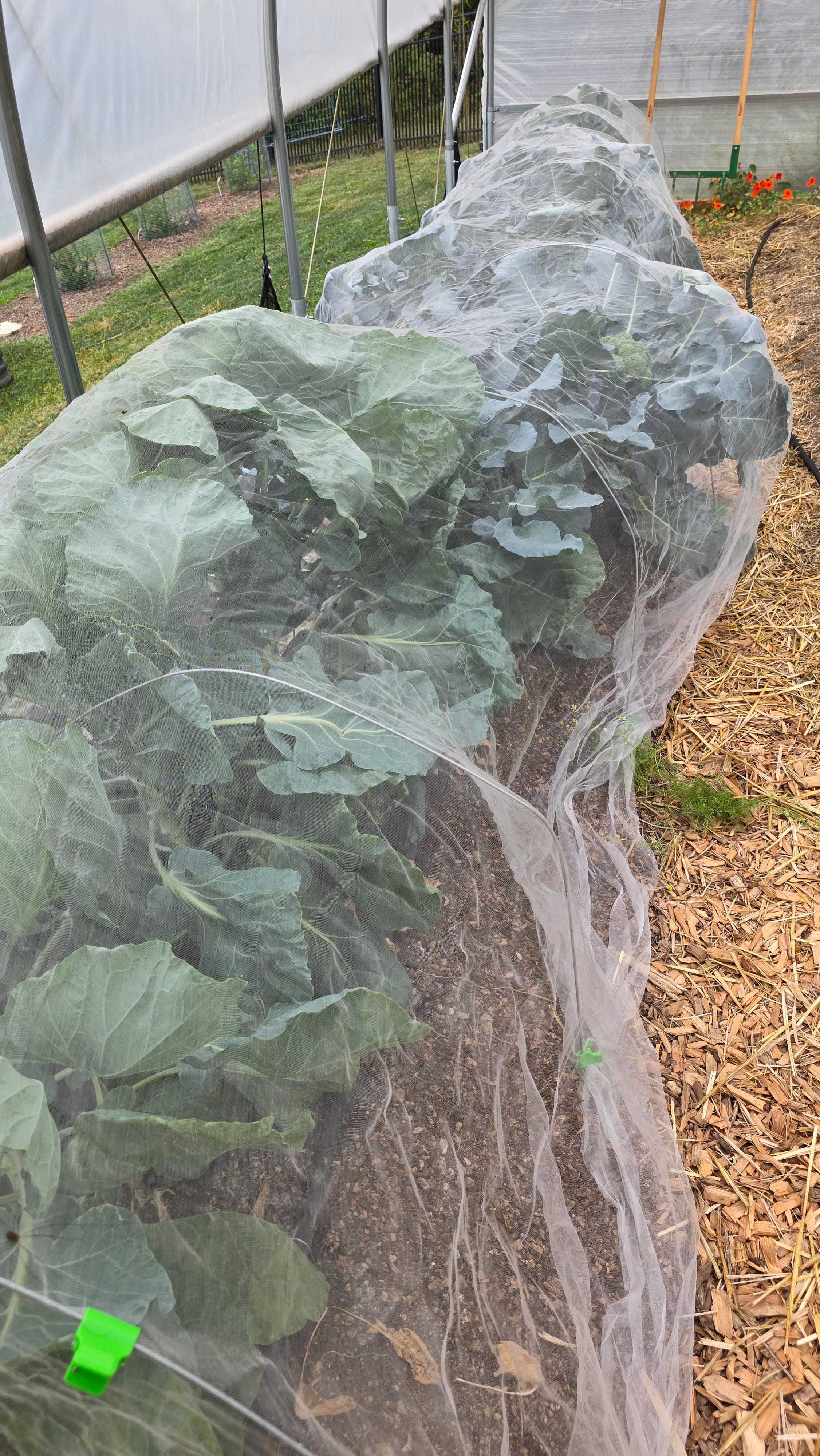
Every day, I check to make sure the flowers in the heads are not opening up. By keeping the heads on the plants for as long as possible, I can let them get as large as possible! It’s important to keep a close eye on them because if the flower buds open, the broccoli quality diminishes.
The brussels sprouts and cauliflower plants are, predictably, taking longer to mature although the cauliflower isn’t that far behind. I grow varieties that have leaves that naturally cover the curd, so I can’t really see how big it is by just looking. I’d have to pull back the leaves. It isn’t quite time to start checking though.
Outside of the polytunnel, the newly transplanted brassicas are growing very quickly. I’ve already needed to loosen the bug netting over the plants once.


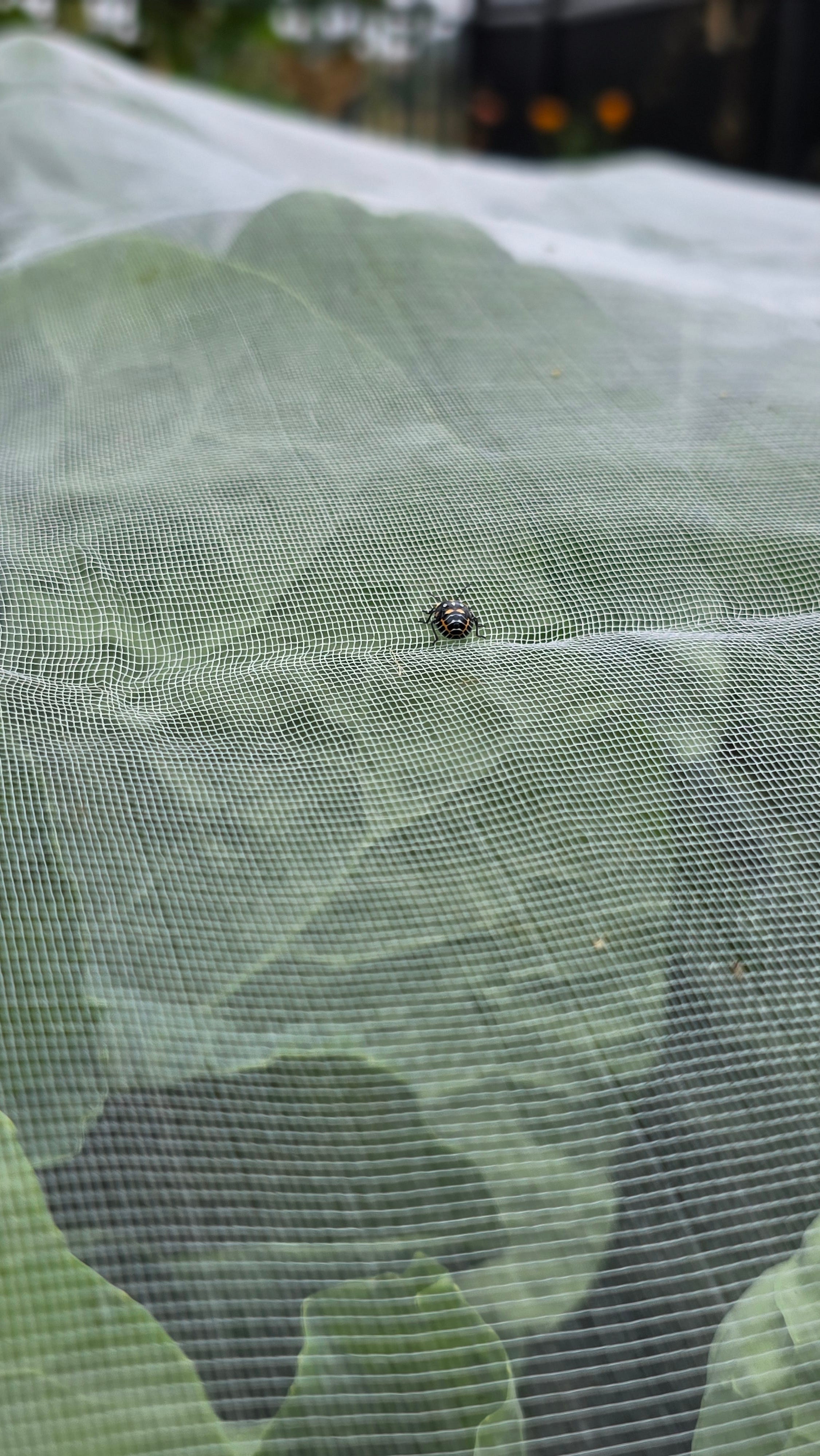
I’ve spotted plenty of moth caterpillars underneath the netting and fabric chewing on the leaves. I’m pretty sure the moth eggs were laid in the soil, because the moths wouldn’t be able to fly under the netting. So, I essentially trapped the caterpillars in there with the plants.
Thankfully, the netting is see-through enough to spot them as they show up.
The downside is that insects like harlequin bugs can feed on the leaves through the netting. At least they can’t lay their eggs on the leaves, though!
Leafy Greens
I have two raised beds, formerly the potato beds, overflowing with leafy greens. I took somewhat of a gamble growing these greens in highly acidic soil, but it paid off. Turns out that the leafy greens can handle acid with no problem.


We’ll struggle to eat this much leafy green, but we’ll certainly do our best. I’ve been adding the endive to my morning smoothies and it’s been great! You can’t really taste it, but the endive adds plenty of nutrients.
We also recently made a cobb salad using the beautiful heads of iceberg lettuce. We’ll do what we can to eat all of this, but whatever bolts or goes bad, we’ll feed to the chickens. I just didn’t expect everything to grow too well or so quickly. The cool weather has really helped.
Winter Squashes
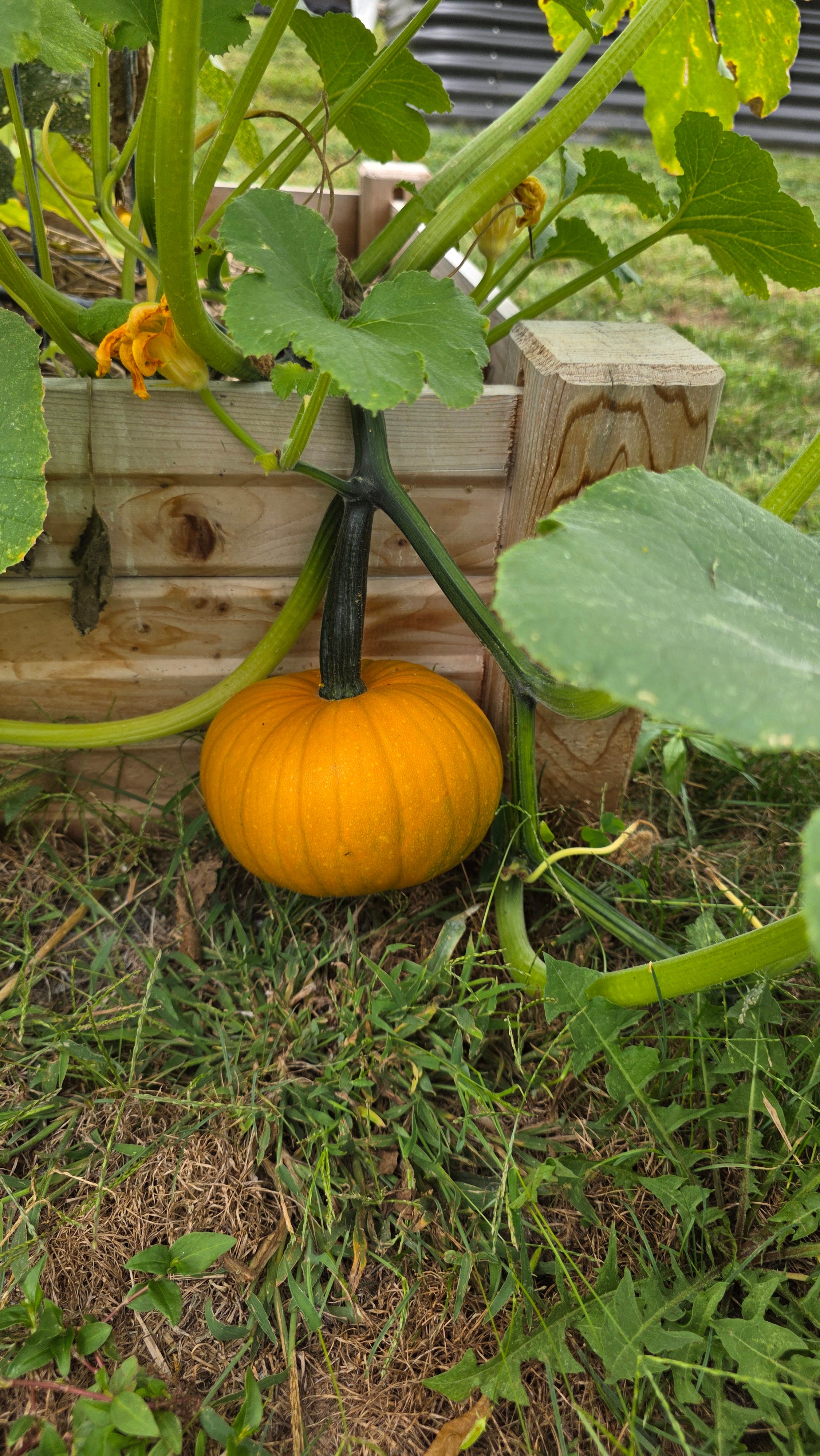
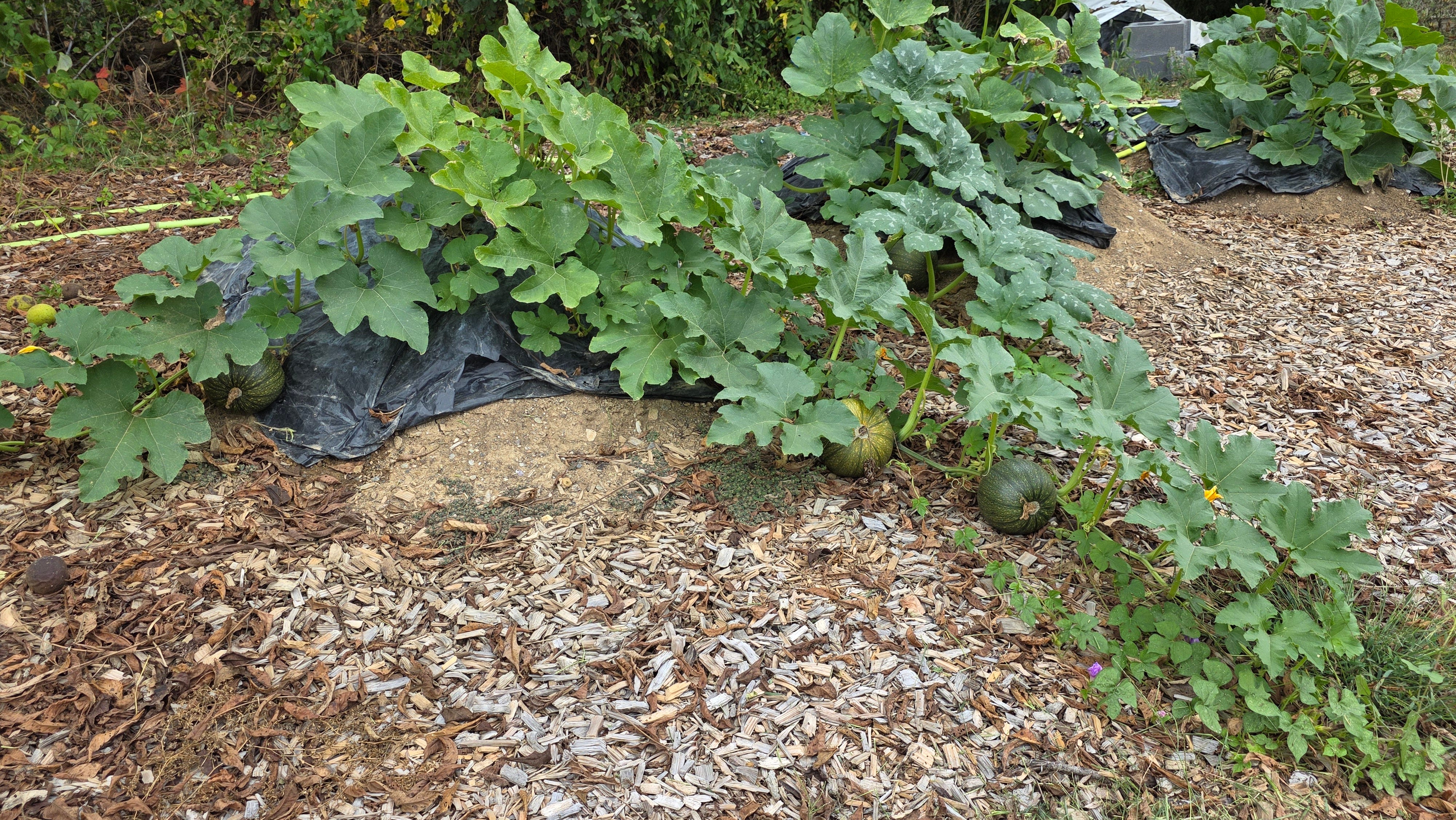
On the squash mounds and under the eggplants, my winter squashes are doing perfectly! Again, another gamble. I really wasn’t sure if my timeline would work out and if I’d get ripe winter squashes. I planted them out much later than I ever have, but it seems I still gave them enough time.
What really helped here is that each variety I’m growing is both early maturing and bears smaller fruit. So, the fruit reach full size much more quickly and they’re able to ripen sooner than they would if they were a standard sized pumpkin.
Peppers
The peppers are still going strong! I’m still getting good yields of bell peppers alongside the steady stream of chilis.
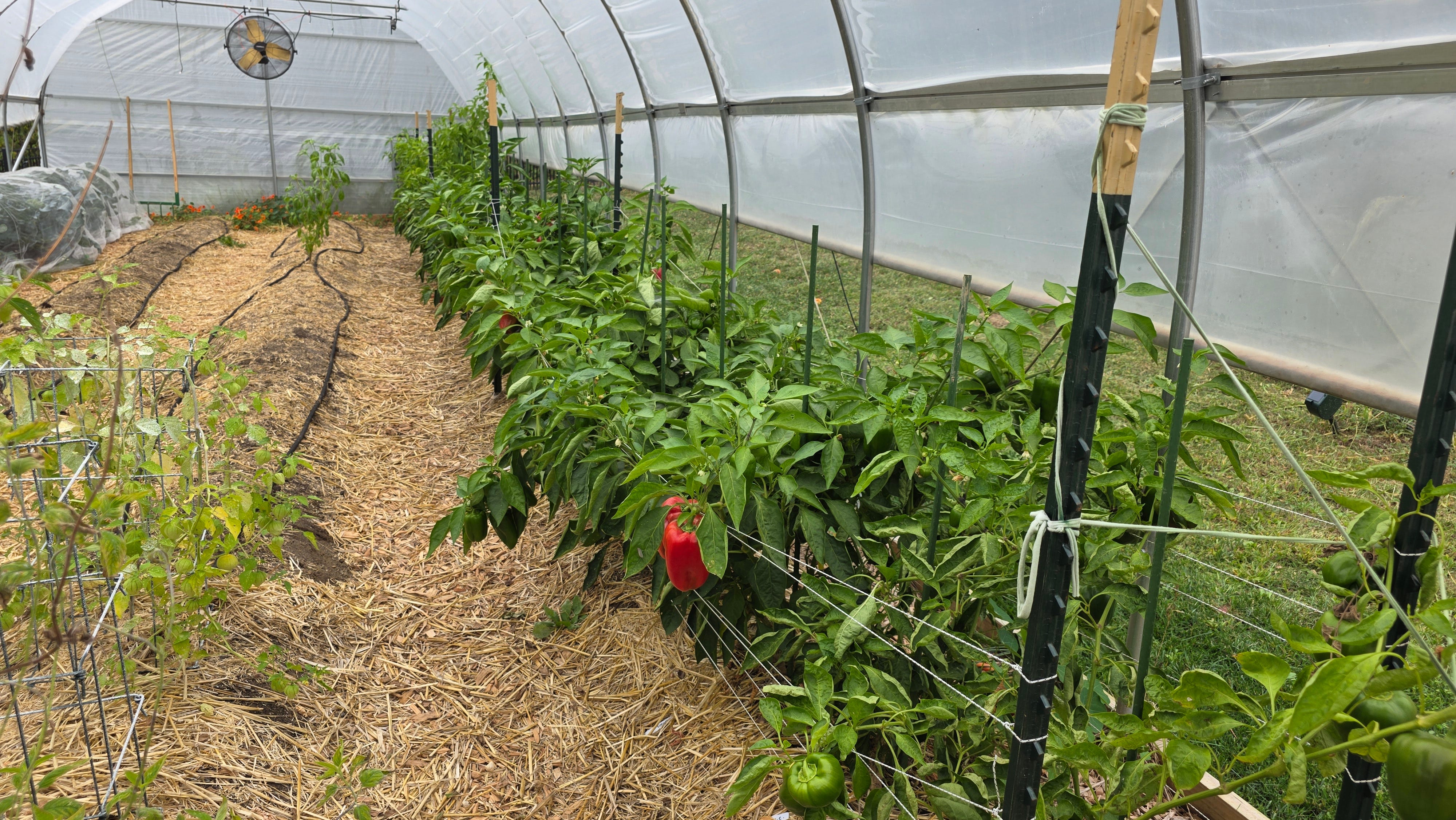
We were able to roast a large batch of both red and orange bells and can them in water. Roasted bells are great for Romesco sauce or for putting on pizza.
Strawberries
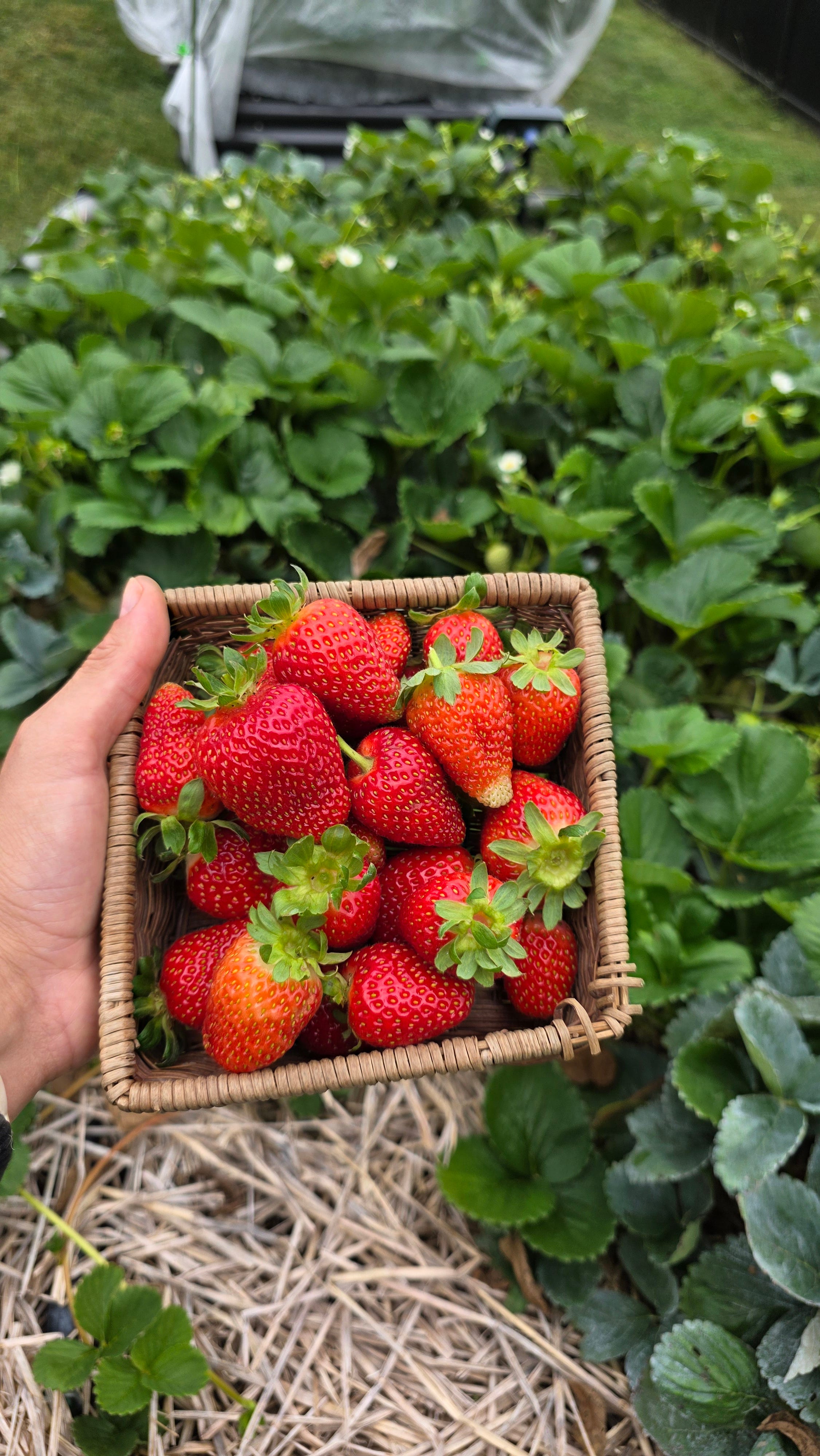
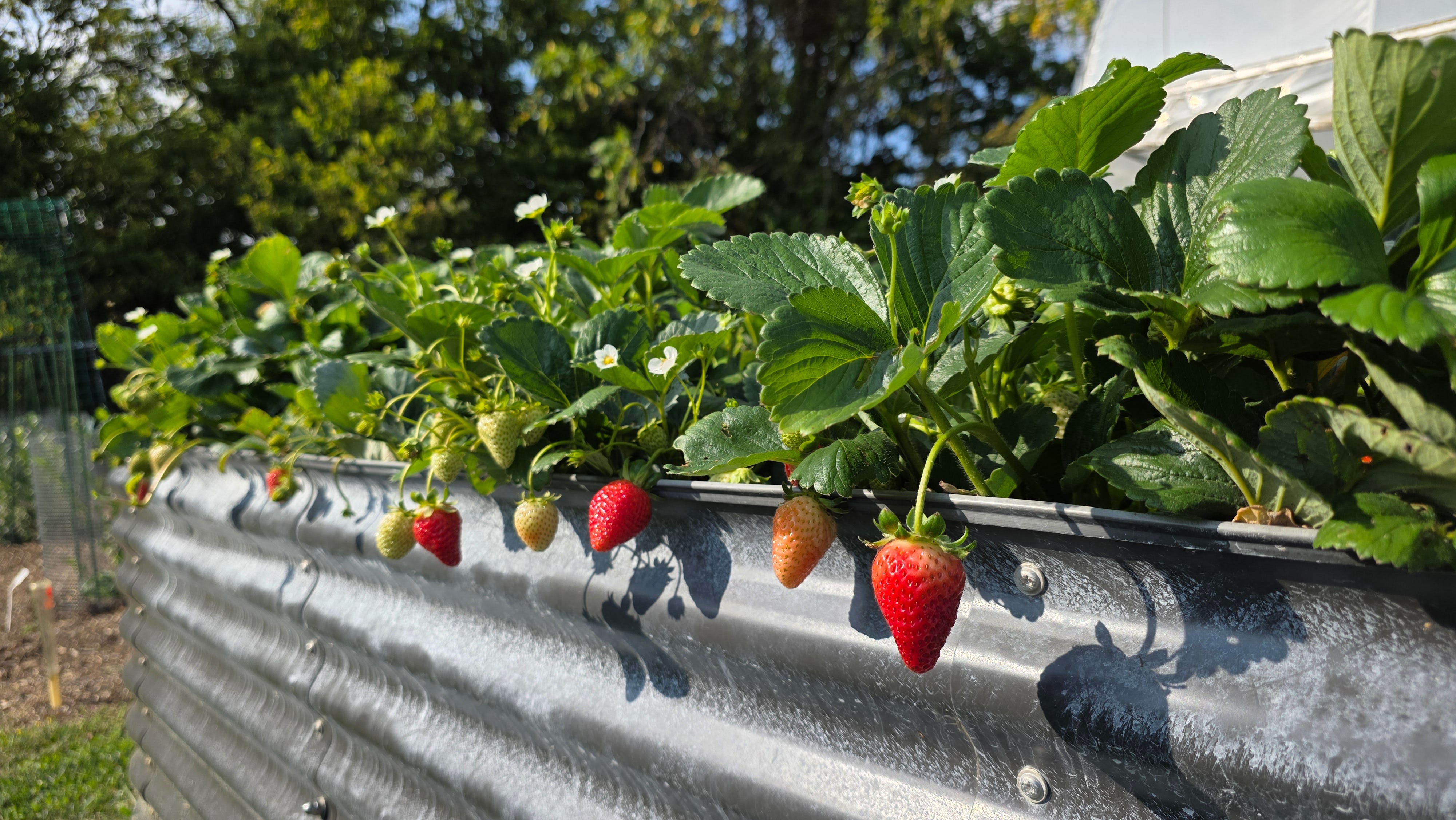
I hesitate to share how well my strawberries are doing because I’m afraid to jinx it. I still haven’t seen any signs of crown rot or other diseases troubling the plants, but it was about this time of year last year that the diseases started to show up.
Regardless, I’m starting to get large harvests of big berries on a regular basis and hope I can keep this batch of plants for next year. Cross your fingers for me!
Summer Squashes
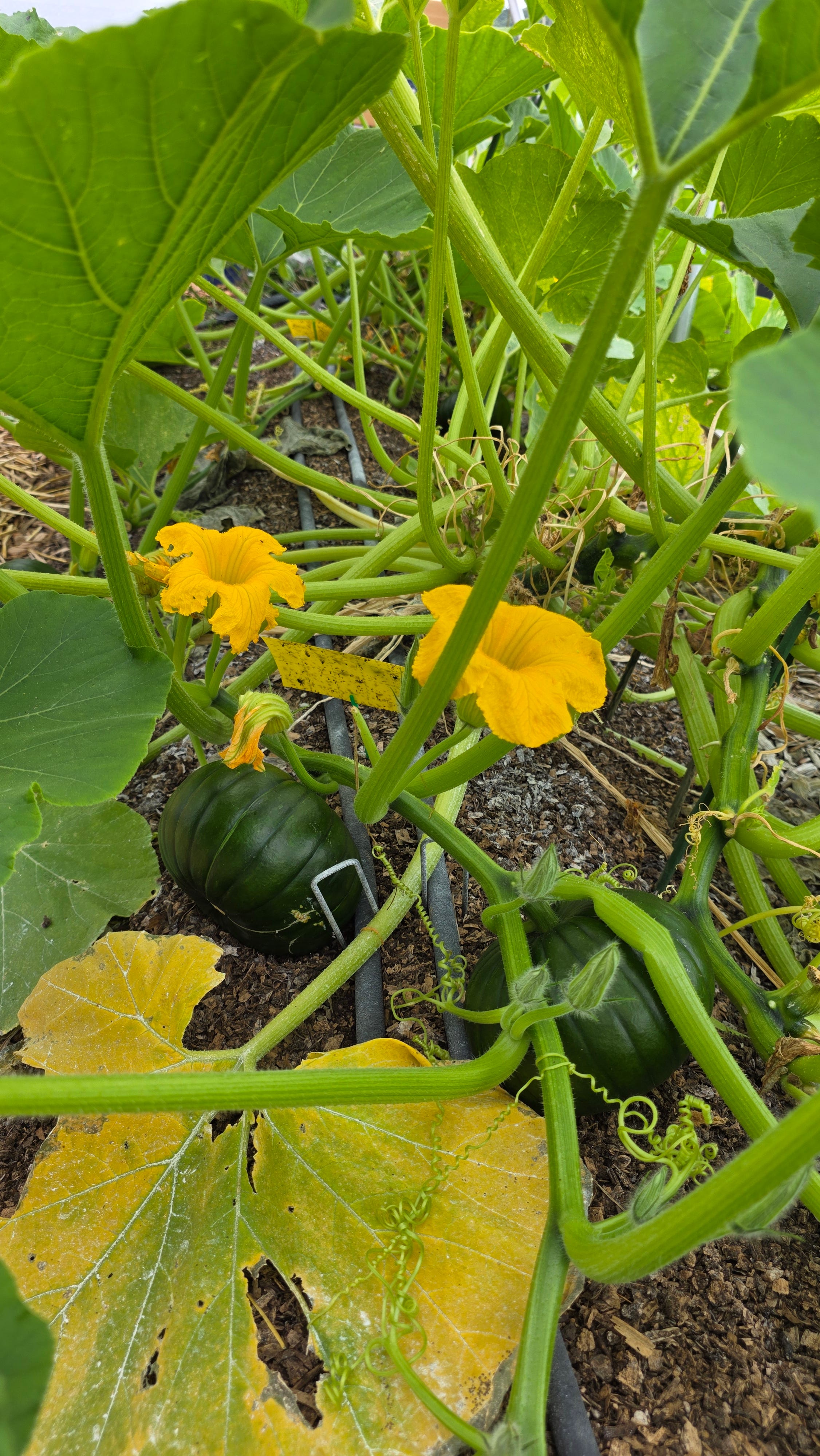
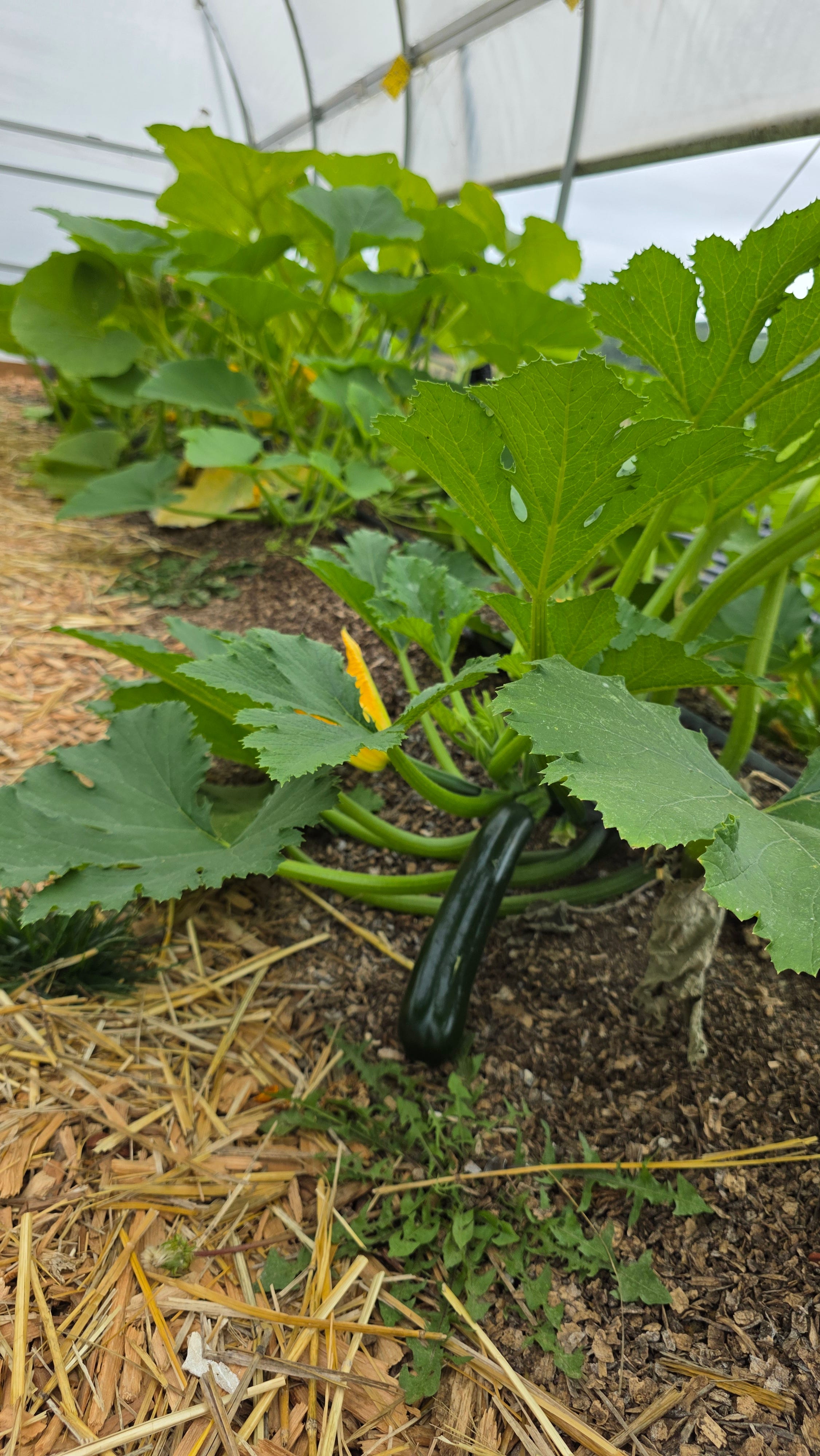
Growing the Zapallito del Tronco squash for fun was one of the best decisions I made this year. I discovered a new variety of summer squash that is much more prolific than a zucchini but that can be used just like a zucchini in any dish.
The plants are not slowing down in terms of growth or production and it seems the pests are not bothering them. I haven’t noticed any squash bugs on them yet, and any cucumber beetle damage has been minimal. Plus, I think I completely avoided the squash vine borer potential damage by planting them out way later than usual.
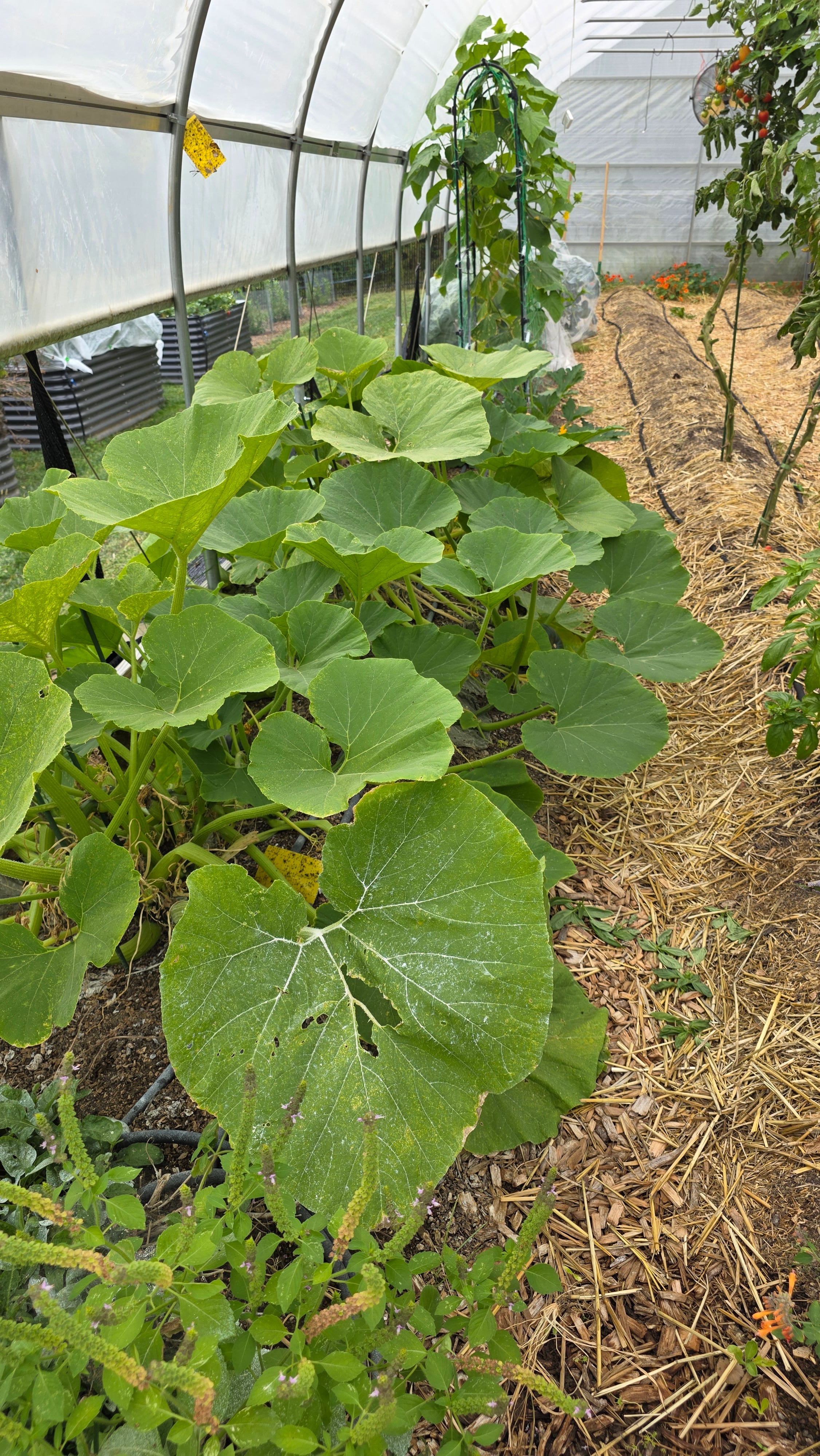
That said, my lone zucchini plant is chugging along next door, having given us several zucchinis so far. I think it should hit its stride for the next few weeks and pump a lot more out until frost kills the plant.
Leeks
I have both Alto and Impala varieties of leek growing in the old cucumber bed and they’re both sizing up wonderfully! They’ll definitely be ready to harvest for fall. I’m really happy with the timing here, and I hope to reproduce this outcome next year.
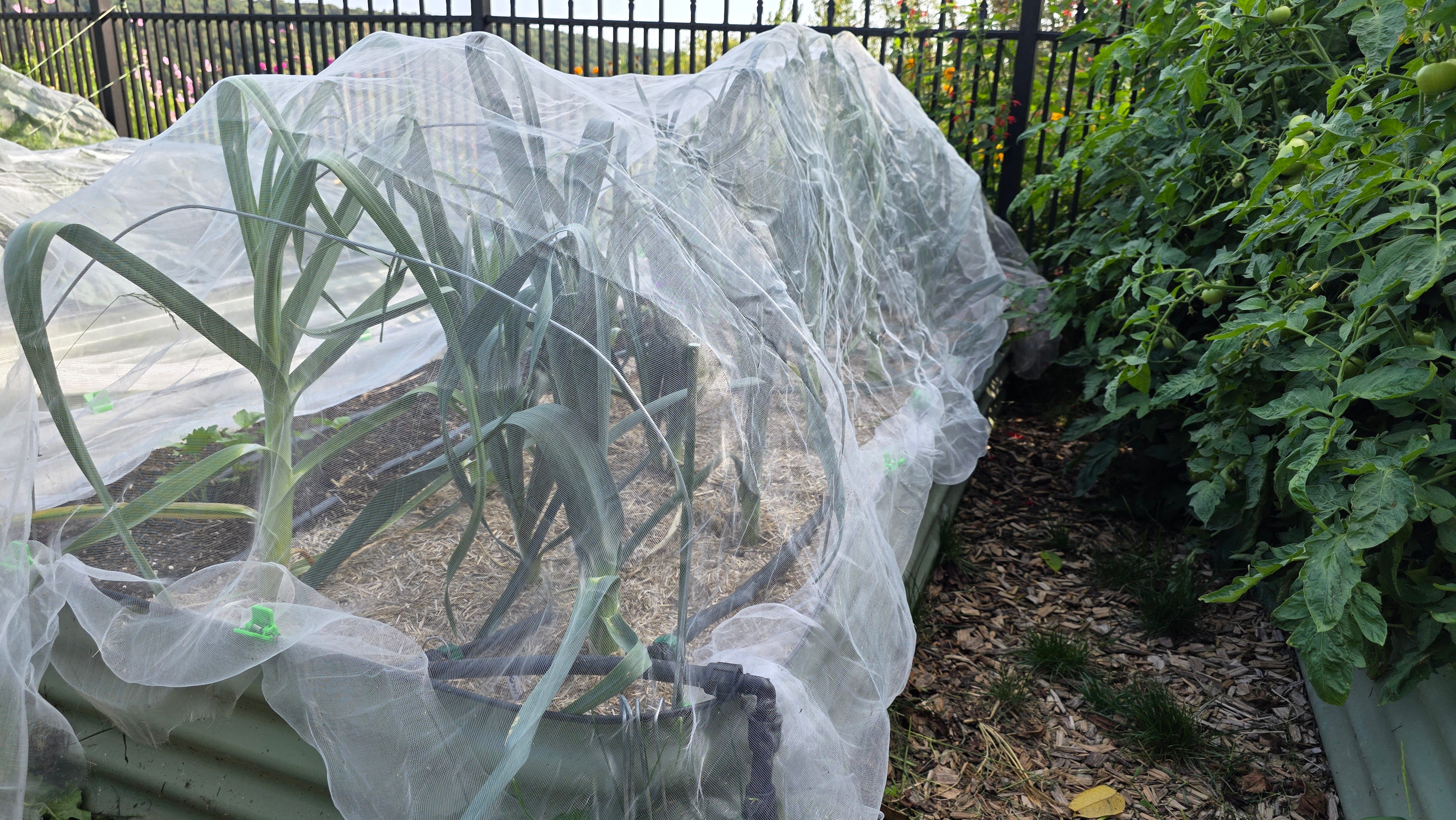
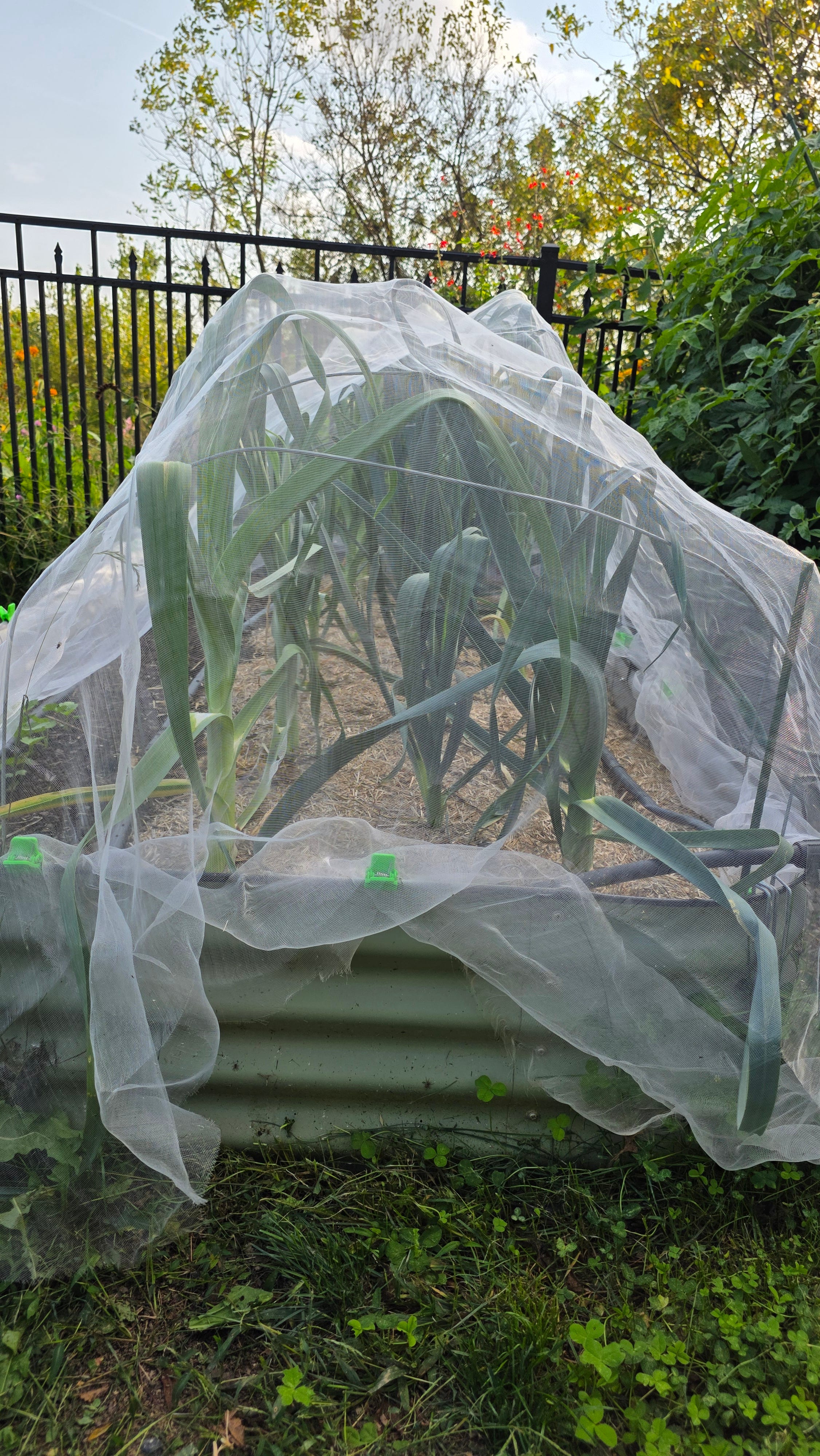
I got giant leeks in both the spring and the fall, which is pretty great!
Blueberries
I haven’t written much about my blueberry bushes, but there isn’t much to say about them! I planted them this spring in a new bed I created last fall.
Prepping My Native Soil for New Blueberry Bushes

I love growing vegetables, but there is something extra special about growing fruit in the backyard. As a food, fruits (I’m referring to what people colloquially consider fruits, not the literal defi…
They’ve grown very well this year! I’m excited to see how big they get next year considering that they’re well established in this bed.
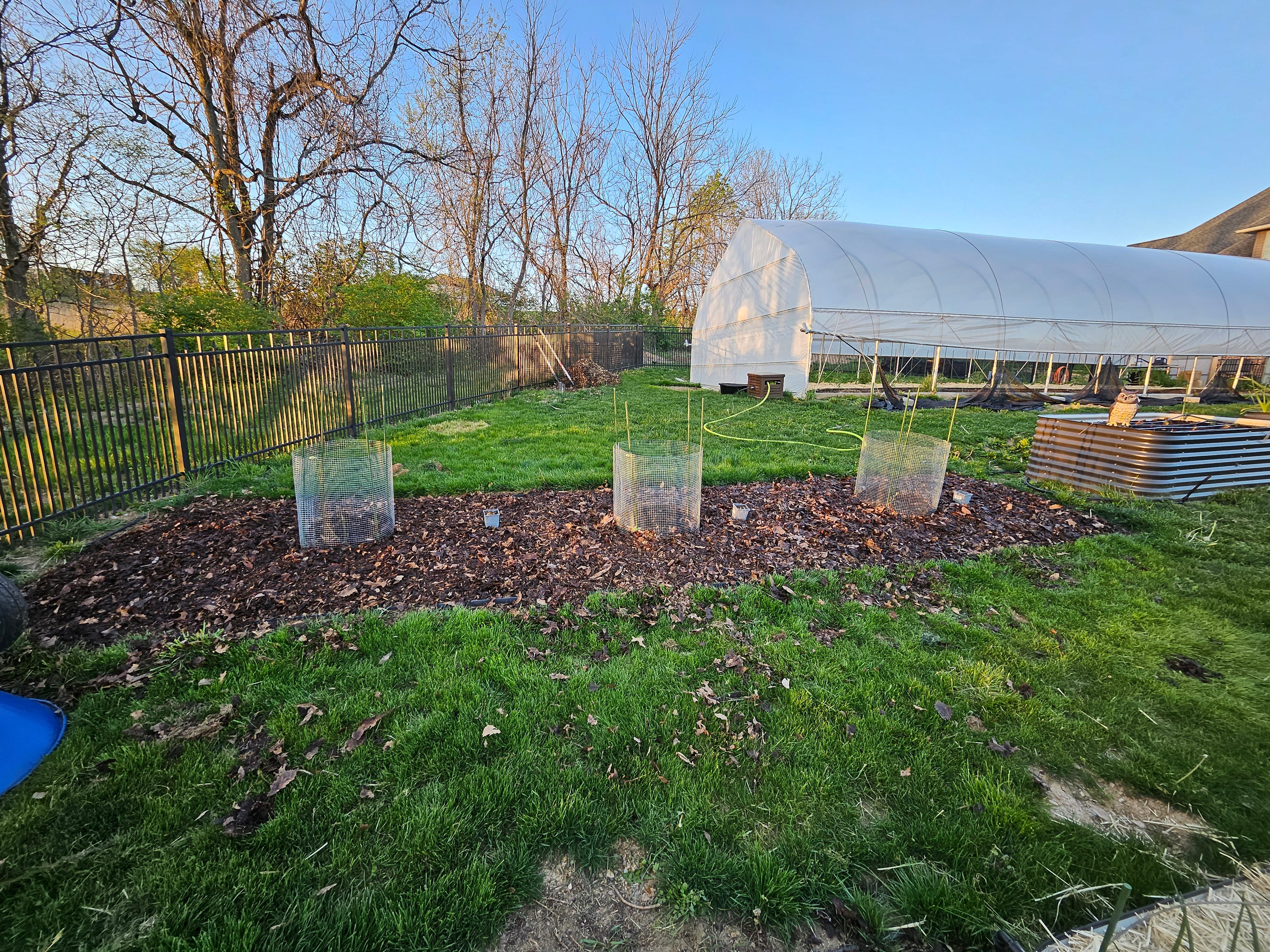
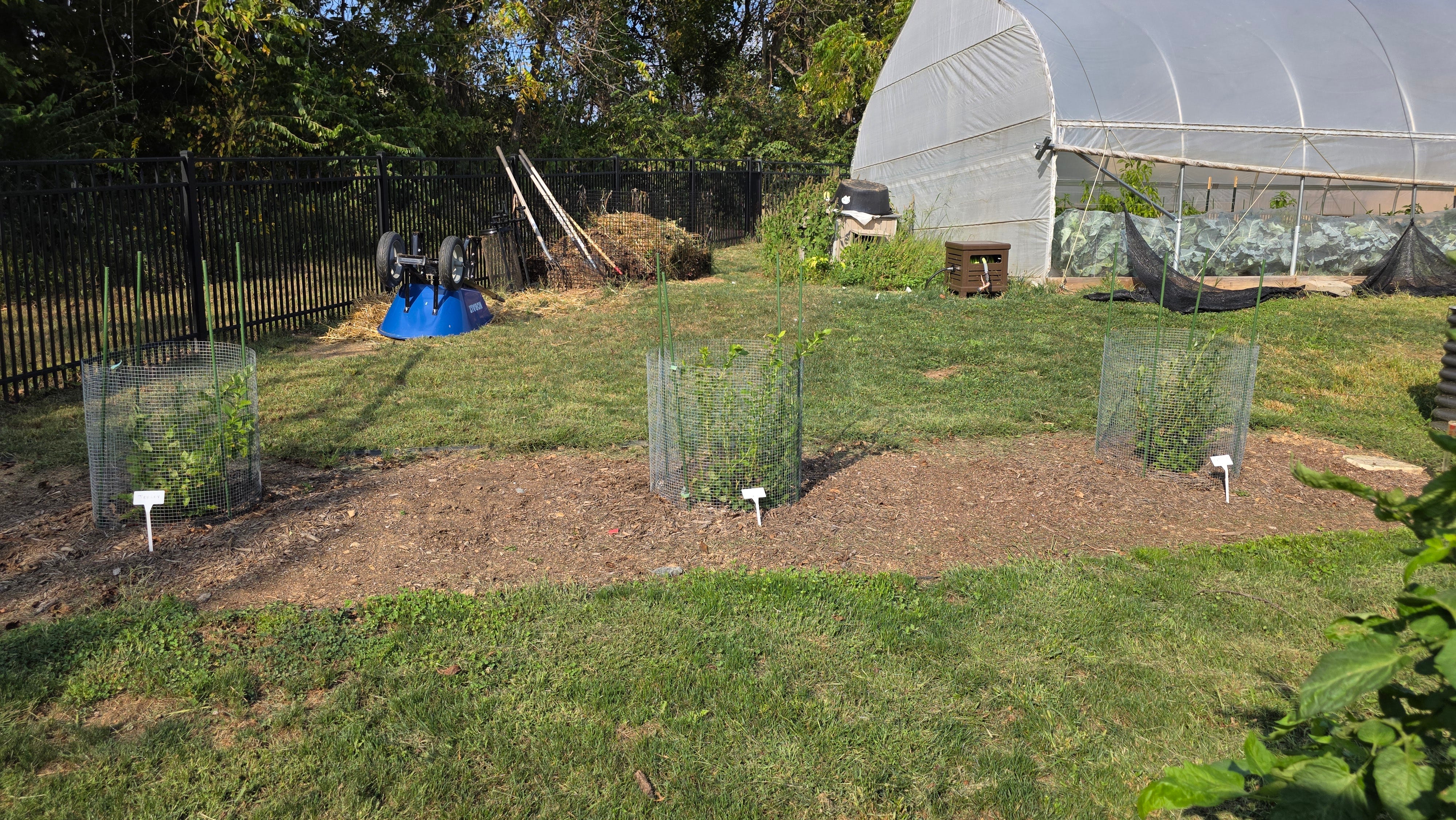
I definitely need to add more mulch to the bed, but it should be easy to find plenty of free mulch now that the leaves are beginning to drop.
Preservation
Right now, I’m focused on getting as much summer produce packed away as possible. When the determinate tomatoes ripen, I’ll do a very big salsa batch and freeze the rest for passata. In the meantime, I have plans to roast chili peppers to can them in water, like the roasted bell peppers.
I’m doing one more batch of pickles for the heck of it (we don’t need more, but why not) this week. After that, I’ll focus on freezing the rest of the strawberry harvest and making more zucchini bread. Soon enough, the big broccoli heads will be chopped off and brought inside. This will be the first time ever I’ve successfully grown enough broccoli to preserve!
Garden Tasks
Bed Flipping
As I mentioned at the start, my attention is being paid to removing plants from the garden and flipping the beds for fall and winter. So far, I’ve removed the tomatoes and dry beans, but the cucumbers and eggplants will soon follow.
Once the plants are out, I like to lightly cultivate some dry, organic fertilizer into the beds and then put a 1-2” layer of compost on top. The compost has a multitude of benefits, but most importantly it protects the soil over the winter. Just like a nice, cozy blanket. In spring, it will contribute to soil health and feed the new plants.
Irrigation Maintenance
After a long year, irrigation systems tend to start cracking and breaking down, so I’m spending some time inspecting everything to make sure it’s still in working order. I recently had to replace an entire hose and a hose splitter that were leaking pretty badly.
Compost
The microbes that decompose the organic matter in my compost pile will only remain active for several more weeks. Once it gets cold, they’ll go dormant until spring. It’s important for me to keep them active and well fed so that I can produce a big batch of finished compost before winter.
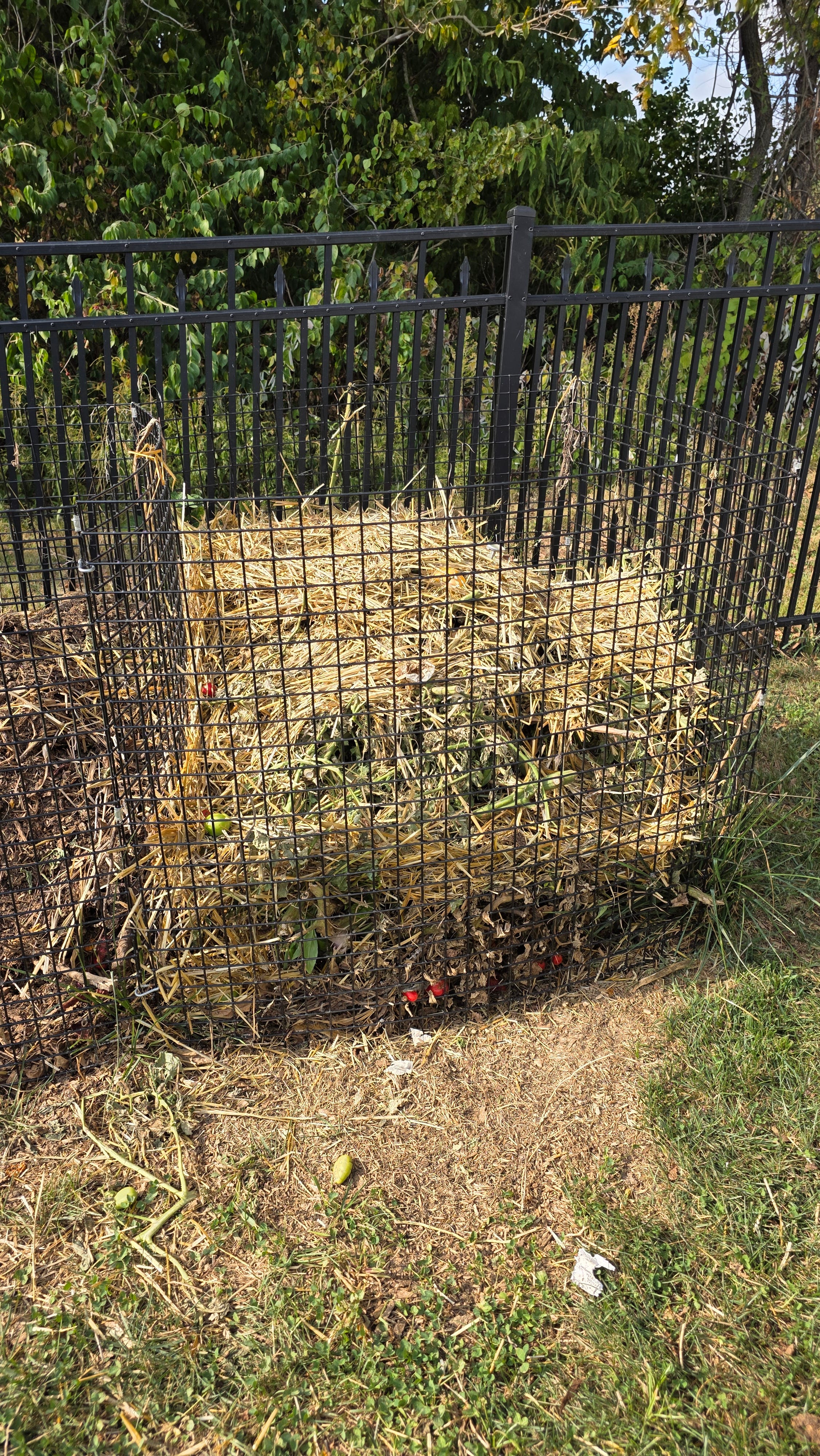
With so much green plant matter being added to the bin, I’m making sure to also add plenty of carbon-based materials like spent straw mulch and hemp.
Once I get most of the plants that are coming out of the garden into the compost bin, I’ll heap chicken manure and hemp bedding into it as well which will really help to heat things up!
Cleaning Up
As plants start to come out of the garden, their supports, ties, and name tags need to be put away as well. Putting these items away in their proper places, though tedious, will make next year easier.
I have a work bench in my polytunnel that takes abuse every year. I’ll be organizing all of the tools I store in the bench as well as cleaning it out.
Looking forward
When I’m not busy shoveling compost into the garden, I’m going to be mostly focused on enjoying the little time I have left with my plants. I’ve been able to witness some beautiful things this year and will certainly miss the garden after winter comes to put it to sleep. Of course, there’s still plenty of produce to preserve so I have yet to finish my time in the kitchen though I’ll suffer it somewhat begrudgingly now.
Once my first pumpkin started to turn orange, I think something clicked in my brain and fall really set in. I’m ready to get the bed flipping over with and to start spending more time sipping hot chocolate while watching butterflies visit my flowers or preying mantises hunt bugs. I’ve had such a great year, but it’s nearly time to say farewell to this growing season.


In my upcoming posts, I’ll be writing about my biggest successes and failures as well as what I plan to do differently next year. I also want to write a series about the best varieties I grew this year, akin to what I did last year, just less lengthy (if I can manage that, lol).
I’ll be sure to keep you updated on the final transitions into a winter garden, too, but there isn’t so much to say on that subject. It’s mostly a bunch of soil shoveling!
In any case, if you’ve followed along with me this year I want to thank you. Writing these posts and sharing my experiences is really helpful to concretize what I learn year over year. I hope that, in some small way, my writing has helped you, too.
Cheers to a great year and to a small rest before winter.
Your post arrived just as I was in the early stages of a piece on my Substack which looks at planting and sowing windows from the other end of the world. I've mentioned your piece in an early para: https://robayson.substack.com/p/gardening-on-the-cusp-planting-annual
Congratulations on the cucumbers!